


an account. You can:
Access your saved cars on any device.
Receive Price Alert emails when price changes,
new offers become available or a vehicle is sold.
How to Sell Your Exotic Car for Top Dollar
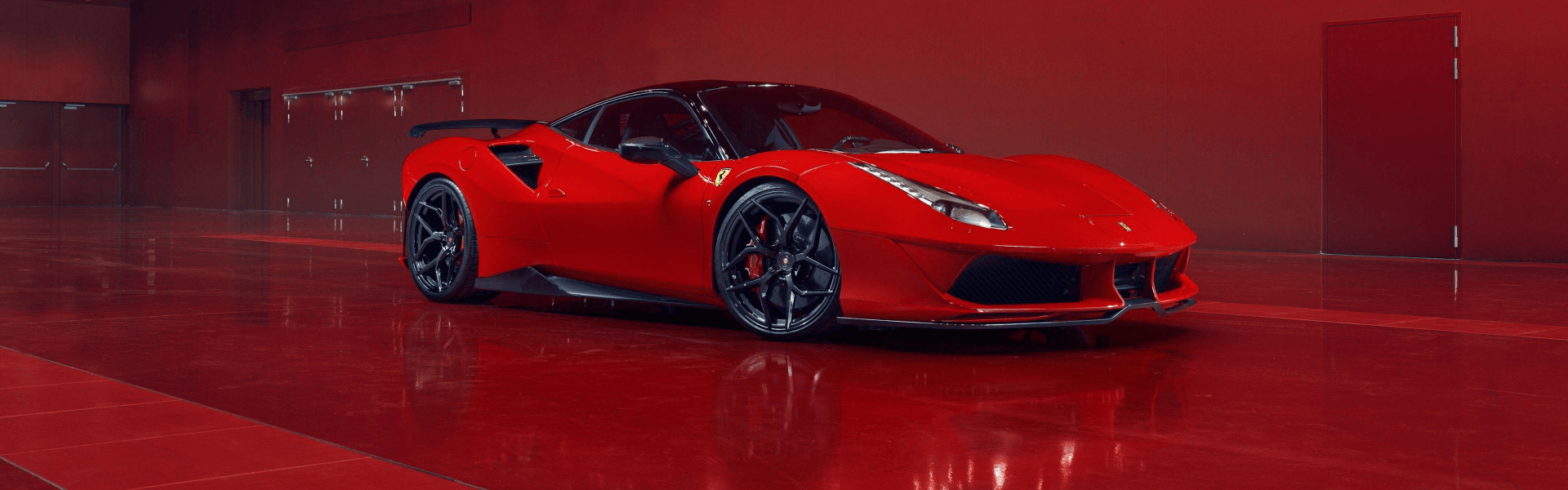
Selling an exotic car is nothing like selling a Honda Civic.
There is no Kelley Blue Book value that accurately reflects your specific Ferrari’s worth. There is no CarMax that will scan your VIN and hand you a fair offer on a Lamborghini Aventador. The buyer pool is tiny, the stakes are high, and every decision you make during the selling process either puts money in your pocket or leaves it on the table.
In over a decade of buying, selling, and brokering exotic cars at Exotics Hunter, we have seen sellers make the same costly mistakes over and over: overpricing by $30,000 and sitting on the market for six months. Underpricing by $20,000 because they accepted the first lowball offer. Losing $15,000 in value because they skipped a $500 detail. Choosing the wrong selling channel and paying unnecessary fees.
This guide will show you exactly how to avoid those mistakes. You will learn how to price your exotic car accurately, prepare it for maximum value, choose the right selling method for your situation, time the market to your advantage, and close the deal without leaving money behind.
Step 1: Know Exactly What Your Car Is Worth (Not What You Hope It’s Worth)
The single biggest mistake exotic car sellers make is mispricing their vehicle.
Overpricing kills deals before they start. An exotic car listed at $20,000-$30,000 above market value will sit on every platform collecting digital dust while serious buyers scroll past it. In the exotic car world, stale listings develop a stigma. Buyers start asking “what’s wrong with this car?” when they see the same listing for months.
Underpricing is equally costly. Accept the first offer without doing your homework and you could leave five figures on the table.
Here’s the deal:
Standard valuation tools like Kelley Blue Book, Edmunds, and NADA do not work reliably for exotic cars. They lack the data to account for the factors that actually drive exotic car pricing: specific options and packages, rare color combinations, Paint to Sample or Ad Personam specifications, modification quality, service history completeness, and mileage thresholds that matter to this market.
How to Accurately Value Your Exotic Car
- Research recent sold prices, not asking prices.
Check completed auctions on Bring a Trailer, Cars & Bids, and RM Sotheby’s. Look at sold listings on dealer sites. Asking prices tell you what sellers hope to get. Sold prices tell you what the market actually pays.
- Match your exact specification.
A 2020 Porsche 911 GT3 in Guards Red with a PDK transmission and 8,000 miles is a completely different car from a 2020 GT3 in PTS Riviera Blue with a manual gearbox and 3,000 miles. The second car could be worth $40,000-$60,000 more. Specification matters enormously in this market.
- Understand mileage thresholds.
Exotic car buyers pay close attention to mileage milestones. Selling before 5,000 miles, 10,000 miles, or 20,000 miles can make a measurable difference. If your odometer reads 9,400 miles, selling now rather than driving another 1,000 miles could be worth thousands of dollars in retained value.
- Get a professional appraisal.
The fastest way to get an accurate market value is to request an appraisal from a reputable exotic car dealer. Exotics Hunter offers same-day cash appraisals for exotic and luxury vehicles anywhere in the United States. Our offers are based on real-time market data, not automated algorithms.
Step 2: Prepare Your Car to Command Premium Pricing
First impressions determine final sale prices. The difference between a car that looks “good” and one that looks “showroom perfect” can be $5,000-$15,000 or more.
Professional Detailing Is Non-Negotiable
A $300-$500 professional detail is the single best return on investment in the entire selling process. A buyer who sees a spotless exterior, a flawless interior, and a clean engine bay immediately perceives higher value. A buyer who sees swirl marks, dust in the vents, and fingerprints on the glass immediately starts looking for reasons to negotiate down.
Go beyond a standard car wash. A proper exotic car detail should include paint decontamination, machine polish or paint correction for swirl marks and light scratches, interior deep clean (leather conditioning, alcantara brushing, glass polishing), engine bay detailing, and wheel/tire dressing.
Paint Protection Film and Ceramic Coating
If your car already has PPF (paint protection film) and ceramic coating, make sure it is documented and in good condition. These protections represent real value to buyers who understand the cost of applying them.
If your car does not have PPF, this is not the time to invest $5,000-$8,000 in a full wrap. Focus on the detail and presentation instead. The exception: if there are significant paint chips on the front bumper, hood, or fenders, having them professionally touched up is worth the modest investment.
Address Minor Cosmetic Issues
Small issues create disproportionately large price objections from buyers:
Curbed wheels should be refinished. A single curbed wheel can cost $200-$400 to repair but will save you $1,000-$2,000 in negotiation. Stone chips on the bumper or hood should be professionally touched up. Worn brake pads and tires should be evaluated. You do not necessarily need to replace them, but know that a buyer will use them as a negotiation point. Price your car accordingly or replace them proactively.
Gather Every Document
Complete documentation is worth real money. Exotic car buyers are meticulous. They want to see the full picture before they commit.
Assemble everything: original purchase documentation (window sticker, original MSRP, option list), complete service records (dealer or reputable independent specialist), all recall documentation showing completion, title (clear, no liens), both sets of keys and any original accessories (car cover, battery tender, tool kit, books/manuals), and any receipts for modifications, PPF, ceramic coating, or aftermarket work.
Cars with complete, organized documentation consistently sell for 10-15% more than equivalent cars with incomplete records. That is not a typo. A $200,000 car with perfect records can command $20,000-$30,000 more than the same car with gaps in its history.
Step 3: Choose the Right Selling Channel for Your Situation
Where you sell your exotic car matters as much as how you price it. Each channel has trade-offs between speed, price, effort, and risk.
Option 1: Sell to a Reputable Exotic Car Dealer (Fastest, Lowest Effort)
This is the fastest path to cash in your pocket. A dealer like Exotics Hunter evaluates your car, makes a competitive offer, handles all paperwork, and can wire funds within days. There is no listing, no photography, no fielding calls from tire-kickers, no test drives with strangers, and no negotiation dance.
The trade-off: dealer offers are typically 5-10% below what you might achieve in a private sale. But for many sellers, the speed, certainty, and elimination of hassle more than justify this difference.
Think about it:
If your car is worth $200,000 and a dealer offers $185,000, the $15,000 difference needs to be weighed against weeks or months of active selling effort, the risk of a deal falling through, the cost of insurance and storage while the car sits unsold, and the potential for further depreciation during a prolonged sales process.
Exotics Hunter provides same-day offers for exotic and luxury vehicles nationwide. Submit your vehicle details here to receive your offer.
Option 2: Private Sale (Highest Potential Price, Highest Effort)
Selling privately gives you direct access to the end buyer, eliminating the dealer margin. In theory, this maximizes your sale price.
In practice, private exotic car sales require significant effort:
You need professional photography (not iPhone photos in your driveway). You need compelling, detailed listing copy that highlights the right specifications. You need to list on the right platforms (Bring a Trailer, Cars & Bids, Rennlist, Ferrari Chat, duPont Registry, Exotic Car Trader). You need to screen buyers for seriousness and financial qualification. You need to arrange test drives safely. You need to manage payment logistics (wire transfers, escrow services). And you need to handle title transfer paperwork.
The buyer pool for exotic cars is small and geographically dispersed. Your ideal buyer might be in another state. Coordinating a remote transaction adds complexity around inspection, shipping, and trust.
Private sales work best for cars with strong demand and clear market value, where the specification is desirable and the pricing is competitive. If your car has unique options, unusual color combinations, or limited-production status, you may attract a premium buyer who is specifically searching for your exact car.
Option 3: Online Auction (Broad Exposure, Variable Results)
Platforms like Bring a Trailer and Cars & Bids have transformed the exotic car market by creating transparent, well-attended auctions with global reach.
The upside: massive buyer exposure, competitive bidding dynamics that can drive prices up, and a defined timeline (auctions typically run 7 days).
The downside: you are committing to sell at whatever price the market determines. Reserve auctions (where you set a minimum price) exist, but a car that does not meet its reserve on auction carries the stigma of a “failed auction” in a market where everyone is watching.
Auction fees vary. Bring a Trailer charges the buyer a percentage (currently 5%, capped at $5,000) and the seller has no listing fee. Other platforms have different fee structures. Understand the costs before you list.
Option 4: Consignment (Middle Ground)
Consignment places your car with a dealer who handles the marketing, showing, and sale on your behalf, taking a commission (typically 5-10%) from the final sale price.
This can be a good option if you want higher exposure than a private sale but do not want to manage the process yourself. The key is choosing the right consignment partner. A dealer who specializes in your type of car, has an active buyer network, and maintains a professional online presence will achieve better results than a general used car lot.
Step 4: Time Your Sale for Maximum Value
The exotic car market is seasonal, cyclical, and sentiment-driven. Timing your sale correctly can add (or preserve) thousands of dollars in value.
Sell Before Key Mileage Thresholds
Mileage thresholds in the exotic car market are real. A car with 4,800 miles is perceived as meaningfully more desirable than the same car with 5,200 miles. The psychological impact of crossing 5,000, 10,000, 15,000, and 20,000 miles is disproportionate to the actual mechanical difference.
If you are approaching one of these thresholds, sell now rather than waiting. Every additional mile reduces your potential sale price.
Sell Before New Model Releases
When a manufacturer announces the next generation of your car, the current generation loses perceived value. If you know a new model is coming, selling before the official announcement or reveal date protects your value.
The Seasonal Sweet Spot: February Through May
Here’s why this matters:
The strongest demand for exotic cars in the United States typically occurs between late February and May. Tax refunds hit bank accounts. Bonus season winds down. The weather improves, making test drives and open-top driving appealing. Snowbird season in South Florida means more affluent buyers are in the market.
Summer demand holds steady but begins to taper. Fall sees a seasonal dip. Winter (November through January) is generally the weakest period for convertibles and open-top cars, though enclosed supercars maintain steadier demand year-round.
Watch the Broader Economic Climate
Exotic car demand correlates with economic confidence. When the stock market is strong and interest rates are favorable, buyers feel comfortable making six-figure discretionary purchases. When uncertainty rises, buyers become more cautious and price-sensitive.
You cannot time the economy perfectly, but you can be aware of the general direction. If economic conditions are favorable and your car is ready to sell, do not wait for “a little more appreciation.” Markets change, and the optimal window may close.
Step 5: Present Your Car Like a Professional
If you are selling privately or through auction, the quality of your listing directly impacts your final sale price.
Professional Photography Is Not Optional
Invest $300-$500 in a professional automotive photographer. The difference between iPhone photos in a cluttered garage and professionally lit, composed images in a clean setting is the difference between attracting serious buyers and attracting low-ball offers.
Shoot in a clean, uncluttered location. Natural light is ideal. Capture every angle: front three-quarter, rear three-quarter, both profiles, full front, full rear. Then the details: engine bay, wheels, interior wide shots, dashboard/gauge cluster, seats, door sills, headliner, trunk, undercarriage (if clean).
A 60-90 second walk-around video adds tremendous credibility. Show the car starting cold. Walk around it slowly. Open the doors. Show the interior. Pop the hood. This level of transparency builds buyer confidence and reduces the negotiation leverage that comes from uncertainty.
Write a Listing That Sells
Your listing copy should cover: full specification (year, model, trim, VIN, exterior color, interior color, transmission), original MSRP and key factory options, current mileage, complete ownership history (number of owners, states registered), full maintenance history summary, any modifications with details and receipts, condition of tires, brakes, and glass, and any known issues or cosmetic imperfections.
Transparency builds trust, and trust commands premium pricing. Disclose imperfections upfront. A buyer who discovers a flaw during inspection that you failed to mention will negotiate harder than a buyer who was informed from the beginning.
Step 6: Navigate Negotiations Without Leaving Money Behind
Exotic car buyers are sophisticated. Many have purchased multiple high-end vehicles. They know the market. Your negotiation strategy needs to match their level of preparation.
Set Your Price with Room to Negotiate
Price your car 5-8% above your target sale price. This gives you room to offer a reasonable concession without going below your bottom line. Exotic car buyers expect to negotiate. A price with zero flexibility signals either desperation or stubbornness, neither of which inspires confidence.
Respond to Every Offer with Data
When a buyer makes an offer below your asking price, do not respond emotionally. Respond with data. Reference recent comparable sales. Highlight your car’s specific advantages (lower mileage, rarer specification, complete documentation, recent service). Frame your counter-offer around facts.
Know Your Walk-Away Number
Before you engage in any negotiation, determine the absolute minimum price you will accept. Write it down. Do not deviate from it. Negotiations have a way of eroding your resolve if you do not have a firm number anchored in advance.
Qualify Buyers Before Investing Time
Before arranging viewings or test drives, verify that the buyer is financially qualified. Request proof of funds or a pre-approval letter. Ask about their timeline and purchase history. A buyer who has purchased exotic cars before will be more efficient and decisive than a first-time buyer who is still “exploring.”
Be wary of buyers who refuse to share any financial information. In the exotic car world, serious buyers understand and respect this standard practice.
Step 7: Close the Deal Safely and Legally
The final stage of selling your exotic car is where things can go wrong if you are not careful.
Payment Methods
Wire transfer is the standard for exotic car transactions. Do not accept personal checks, cashier’s checks (which can be forged), or cash for a six-figure transaction. A wire transfer provides a verifiable, irreversible transfer of funds from the buyer’s bank to yours.
Escrow services provide an additional layer of protection for both buyer and seller, particularly in remote transactions where the parties have no prior relationship. The escrow service holds the funds until both parties confirm the transaction is complete.
Title Transfer
Ensure your title is clean and free of liens. If you have an existing loan, you will need to coordinate payoff with your lender before or simultaneously with the sale. Many lenders will provide a payoff letter that facilitates this process.
Title transfer requirements vary by state. Familiarize yourself with your state’s DMV process or work with a title service that handles the paperwork on your behalf.
Bill of Sale
Execute a written bill of sale that documents: the full legal names of buyer and seller, the vehicle’s year, make, model, VIN, and odometer reading, the agreed sale price, the condition of the vehicle (as-is), the date of sale, and signatures of both parties.
Insurance and Liability
Maintain your insurance coverage until the moment the title transfers. Once the buyer takes possession, confirm that they have secured their own coverage. The last thing you want is liability for an incident that occurs after the sale but before you have formally transferred the title.
The Easiest Way to Sell Your Exotic Car: Let Us Handle It
If you have read this far, you understand that selling an exotic car for top dollar requires research, preparation, marketing, negotiation, and logistical coordination. It is a process that takes time, expertise, and attention to detail.
And the best part?
You do not have to do any of it yourself.
Exotics Hunter buys exotic and luxury vehicles directly from owners across the United States. Our Sell My Exotic process is designed to give you a competitive offer with zero hassle:
- Submit your vehicle details.
Use our online form or call us at (954) 419-5655. Provide your car’s year, make, model, mileage, and condition. Include photos if available.
- Receive a same-day cash offer.
Our team evaluates your car using real-time market data, recent comparable sales, and our extensive experience in the exotic car market. We provide a fair, transparent offer, typically within the same business day.
- Close on your timeline.
Accept the offer and we handle everything: paperwork, title transfer, payment via wire transfer, and vehicle pickup logistics. We coordinate pickup from your location anywhere in the United States. There are no listing fees, no auction uncertainty, and no months of waiting.
We buy Ferraris, Lamborghinis, Porsches, McLarens, Rolls-Royces, Bentleys, AMG GT models, and virtually any exotic or luxury vehicle. Whether you are selling a $100,000 sports car or a $1,000,000 hypercar, the process is the same: fast, fair, and professional.
Ready to find out what your car is worth? Get your free appraisal here.
Common Mistakes That Cost Exotic Car Sellers Thousands
Before we wrap up, here are the most expensive mistakes we see sellers make. Avoid these and you are already ahead of 90% of the market.
Mistake #1: Emotional pricing. Your car is not worth what you paid for it, what you put into it, or what it means to you. It is worth what the market will pay today. Price based on data, not sentiment.
Mistake #2: Ignoring presentation. A $200,000 car photographed in a dirty garage with an iPhone looks like a $160,000 car. Presentation is not vanity. It is a financial decision.
Mistake #3: Choosing the wrong platform. Listing a $500,000 Ferrari on Craigslist will attract the wrong audience. Listing it on a platform that specializes in exotic cars will connect you with qualified buyers.
Mistake #4: Hiding flaws. Buyers will find every imperfection during their inspection. If you disclosed them upfront, they factor it into their initial offer. If they discover it themselves, they use it as leverage to negotiate harder.
Mistake #5: Waiting too long. Every month your car sits unsold, it depreciates, costs money to insure and store, and accumulates the stigma of a stale listing. If the market is right and your car is ready, sell.
Your Car Is Worth More Than You Think. Find Out Today.
Selling your exotic car for top dollar is not about luck. It is about preparation, pricing, presentation, and choosing the right partner.
Whether you decide to sell privately, consign, auction, or sell directly to a dealer, the principles in this guide will help you maximize your return.
At Exotics Hunter, we make selling your exotic car as effortless as driving one. Our team has over a decade of experience in the exotic car market. We understand what these cars are worth. We know what buyers are looking for. And we are ready to make you a competitive offer today.
Get your same-day cash offer at exoticshunter.com/sell-my-exotic.
Or call us directly at (954) 419-5655. Your exotic car deserves a seller who knows its value.