


an account. You can:
Access your saved cars on any device.
Receive Price Alert emails when price changes,
new offers become available or a vehicle is sold.
The Complete Guide to Buying a Pre-Owned Porsche GT Car
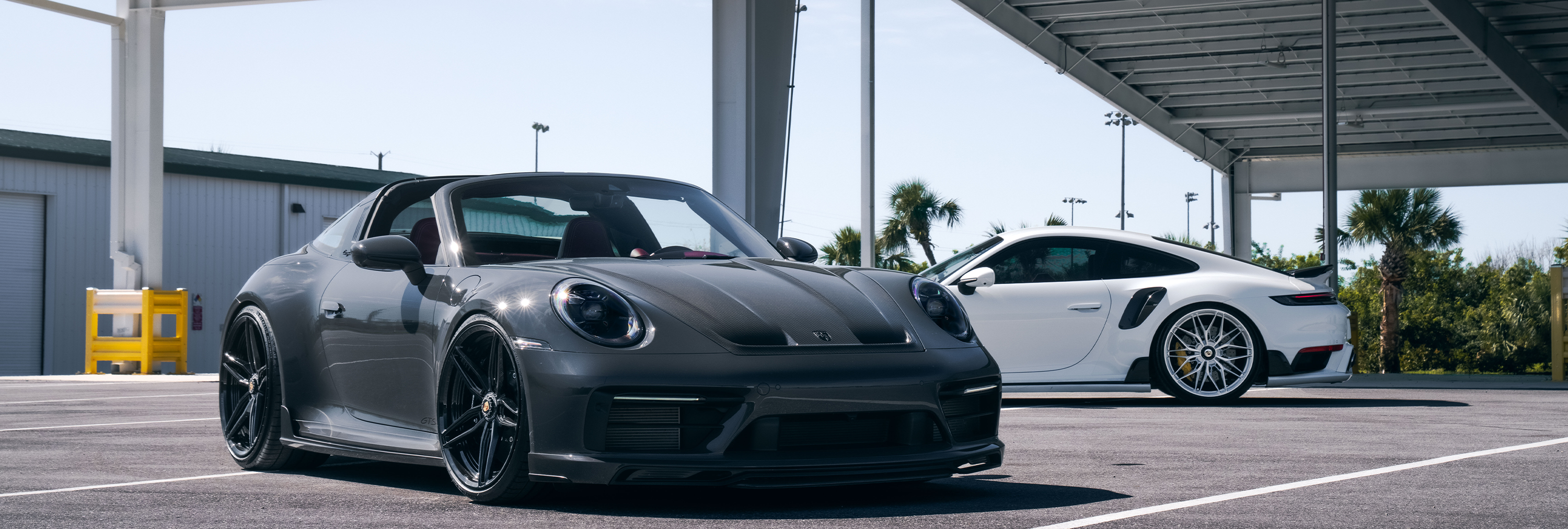
You already know the Porsche 911 GT3 is one of the greatest driver’s cars ever built. That naturally aspirated flat-six screaming to 9,000 RPM. The race-bred suspension that turns every corner into a conversation between you and the tarmac. The feeling that Porsche’s motorsport division hand-delivered a Le Mans prototype disguised as a street car.
But buying a pre-owned Porsche GT car is a completely different skill set than driving one.
This guide will walk you through every generation of the Porsche GT3, GT3 RS, and GT2 RS. You’ll learn exactly what to look for during a pre-purchase inspection, how to decode track history, which generations offer the best value, and how to avoid the costly mistakes that trap first-time GT buyers.
Whether you’re hunting your first GT3 or adding a second RS to the collection, this is the resource we wish existed when we started buying and selling these cars over a decade ago.
Why Porsche GT Cars Are in a Class of Their Own
The GT3 is not a trim level. It’s an entirely different philosophy.
Standard 911 models are engineered to be versatile grand tourers. The GT division strips that philosophy down to its core and rebuilds it around one objective: the purest possible driving experience.
Every GT3 starts life in Porsche’s motorsport department, not its production car division. The engines are hand-assembled. The suspension geometry is borrowed directly from race cars. The aerodynamics are validated in the same wind tunnel that shapes Porsche’s Le Mans prototypes.
This matters for buyers because it means GT cars hold their value differently than standard 911s. Limited production numbers, motorsport pedigree, and a fanatical owner community create demand that consistently outpaces supply.
Here’s why this matters:
A well-bought pre-owned GT3 is one of the few performance cars that can be driven hard, enjoyed thoroughly, and resold at minimal loss. In many cases, owners have seen appreciation that rivals traditional investment vehicles.
At Exotics Hunter, we’ve helped collectors and first-time buyers navigate this exact process. Our curated inventory of exotic and luxury vehicles includes some of the most sought-after GT cars in the market, each one inspected and vetted to the standards outlined in this guide.
The Porsche GT Lineup: GT3, GT3 RS, GT2 RS, and GT3 Touring Explained
Before you shop, you need to understand what separates each model in the GT family. These are not just different power levels. They represent fundamentally different approaches to performance.
The GT3: Track Capability Meets Daily Usability
The GT3 is the sweet spot of the entire lineup. It delivers roughly 90% of the RS’s track performance while remaining comfortable enough to drive to dinner on a Friday night.
Every generation of the GT3 has featured a naturally aspirated flat-six engine, rear-wheel drive, and a chassis tuned by Porsche’s motorsport engineers. It’s available with either a manual transmission or the lightning-fast PDK dual-clutch gearbox (depending on the generation).
For most buyers entering the GT car world for the first time, the GT3 is the right starting point.
The GT3 RS: When the Track Is the Priority
The RS (Rennsport, German for “racing sport”) takes everything about the GT3 and dials it further toward the racetrack.
Expect more aggressive aerodynamics, additional weight savings through carbon fiber components, stiffer suspension, and in most generations, slightly more horsepower. The trade-off is a firmer ride and louder cabin on the street.
The RS commands a significant premium over the standard GT3. This premium is justified by lower production numbers and a more extreme specification. RS models have historically appreciated faster and held their value more firmly than base GT3s.
The GT2 RS: The Turbo-Powered Track Monster
The GT2 RS combines the lightweight, rear-drive GT philosophy with twin turbochargers. The result is a car that trades the naturally aspirated character for massive power output.
The 991-generation GT2 RS produced 700 horsepower from its 3.8-liter twin-turbo flat-six and held the production car lap record at the Nürburgring Nordschleife when it launched.
These are rare, expensive, and extraordinarily fast. Pre-owned examples rarely stay on the market long.
The GT3 Touring: Stealth Performance
Introduced during the 991.2 generation, the Touring Package deletes the GT3’s fixed rear wing in favor of a retractable spoiler. The result is a car that performs identically to the winged GT3 but looks more like a standard Carrera from the outside. It’s the choice for buyers who want GT3 performance without broadcasting it. Browse our current Exotics Hunter inventory to see if we have any GT Touring models in stock.
Every Generation of the Porsche GT3: What to Know Before You Buy
Each generation of the GT3 has its own personality, strengths, and quirks. Understanding these differences is essential for making a smart purchase.
996 GT3 (1999-2005): Where the Legend Began
The original GT3 launched in 1999 as a homologation model for FIA GT3-class racing. It was powered by a 3.6-liter naturally aspirated flat-six producing 360 horsepower (later bumped to 381 hp in the 996.2 facelift). Transmission was a six-speed manual only.
The 996 GT3 is the purest, most analog GT3 you can buy. No electronic aids, no dual-clutch gearbox, and a direct mechanical connection to the road that later generations refined but never quite replicated.
Fewer than 5,000 examples were produced across both variants. The 996 was only officially sold in the US starting with the 2004 model year (the 996.2).
But here’s the thing:
Prices on clean 996 GT3s have been climbing steadily. Early examples that sold for $60,000-$80,000 a decade ago now regularly trade above $150,000 for well-documented cars. The 996 GT3 RS, limited to around 680 units globally, has entered true collector territory.
What to watch for:
The 996 GT3 uses the Mezger engine, which does not suffer from the IMS bearing failure that plagues standard 996 Carreras. However, the adhesive-bonded coolant pipes can detach after many heat cycles, especially in heavily tracked cars. This is a known issue across all Mezger-engine cars and should be inspected during any pre-purchase evaluation.
997 GT3 (2006-2012): The Modern Classic
The 997 generation is where the GT3 hit its stride. The 997.1 GT3 arrived with 415 horsepower and became the first GT3 to feature Porsche Active Suspension Management (PASM). The 997.2 update raised output to 435 horsepower and introduced the option of ceramic composite brakes (PCCB).
Many enthusiasts consider the 997 GT3 the best all-around generation. It combined the analog, mechanical feel of the 996 with modern reliability, better build quality, and significantly improved aerodynamics.
The 997 GT3 RS 4.0, limited to just 600 units worldwide, is the crown jewel of this generation. With 500 horsepower from an engine shared with the 911 RSR race car, it’s one of the most collectible modern Porsches in existence.
What to watch for:
Center-lock wheel hubs require careful inspection and regular greasing, especially on cars with track history. There was a recall covering 2010-2011 models for this specific component. The front axle lift system (if equipped) has a notably high failure rate, with repair costs ranging from several thousand dollars to well into five figures. Also verify that the pressure plate (the riveted design on 3.8-liter cars) has been inspected or upgraded to the bolted 4.0 RS part.
991 GT3 (2013-2019): The Technology Leap
The 991 generation marked a significant shift. The engine grew to 3.8 liters (later 4.0 liters in the 991.2), and the GT3 initially launched with PDK only, dropping the manual transmission entirely.
This was controversial. Porsche purists were vocal about the loss of the stick shift.
Porsche listened. The 991.2 GT3 (2018-2019) reintroduced the six-speed manual, and it’s now one of the most desirable specifications in the used market. Manual 991.2 GT3s consistently command a $20,000-$40,000 premium over equivalent PDK cars.
The 991 also introduced rear-axle steering and a new engine family that pushed output to 500 horsepower while maintaining the 9,000 RPM redline.
What to watch for:
Unlike the 996 and 997 GT3s, the 991 uses the direct-injection engine family rather than the Mezger. These engines are robust but require meticulous oil change schedules. The DME (engine control unit) report is essential for any pre-purchase inspection. It records over-rev events, which reveal whether the car has been driven beyond its mechanical limits. A reputable Porsche specialist or independent shop experienced with GT cars should analyze this data as part of the PPI.
992 GT3 (2021-Present): The Current Benchmark
The current 992-generation GT3 is the most advanced GT car Porsche has ever produced. It features a 4.0-liter flat-six making 502 horsepower, double-wishbone front suspension pulled directly from the 911 RSR race car, and an iconic swan-neck rear wing.
The 992 GT3 lapped the Nürburgring Nordschleife in 6 minutes and 59.9 seconds. That’s over a minute faster than the original 996 GT3 on the same circuit. Let that sink in.
The 2025 update (992.2) brought the new Weissach Package option for the first time on a GT3, along with refined aerodynamics and updated Matrix LED headlights.
Pre-owned 992 GT3s are entering the market in increasing numbers, though demand continues to outpace supply. Both PDK and manual examples are available, with the manual commanding the expected premium.
What to watch for:
The 992 GT3 is still relatively new, so long-term reliability data is limited. Focus your PPI on confirming the vehicle’s history (track use, accident history, CARFAX verification), checking the ceramic brakes if equipped (PCCB rotors are expensive to replace), and verifying that all software updates and recalls have been completed. The 2025 model year had a rearview camera recall that should be confirmed as resolved.
The 7-Point Pre-Purchase Inspection Checklist for GT Cars
A standard pre-purchase inspection is not sufficient for a GT car. These are high-performance machines that may have been tracked, modified, or subjected to stresses that a typical used car inspection won’t detect.
Here’s the deal:
Skipping a proper PPI on a GT car is one of the most expensive mistakes you can make in the exotic car market. We’ve seen buyers lose $30,000 or more on issues that a thorough inspection would have caught in an afternoon.
1. DME/ECU Data Analysis
This is the single most important diagnostic step for any GT3 purchase. The DME (Digital Motor Electronics) records critical engine data including over-rev events, fault codes stored in non-volatile memory, and operating parameters that reveal how the car has been used.
A GT3 that shows multiple over-rev events above 9,200 RPM has likely been driven beyond its design limits. This doesn’t automatically disqualify the car, but it should be factored into the price and negotiation.
Only a shop with Porsche PIWIS diagnostic equipment can pull this data accurately. Do not accept a PPI from a shop that lacks this tool.
2. Paint Thickness Measurement
Use a paint depth gauge on every panel. Factory Porsche paint typically measures between 4.0 and 5.0 mils. Significant variation between panels (for example, a hood reading 6.8 mils while fenders read 4.1 mils) indicates that panels have been repainted, often to conceal collision damage.
A clean CARFAX does not guarantee an accident-free history. Professional paint measurement catches what vehicle history reports miss.
3. Brake System Inspection
GT cars eat brakes. If the car has been tracked (and most have), expect to find accelerated wear on pads, rotors, and fluid.
For cars equipped with PCCB ceramic brakes, rotor thickness must be measured by a Porsche dealer using their specific tools. Replacement ceramic rotors can cost $8,000-$15,000 for a full set. Standard steel rotors are significantly cheaper but still represent a meaningful expense if they need replacement.
Inspect caliper pistons and seals for leaks, and check brake lines for heat damage or deterioration.
4. Suspension and Chassis Evaluation
Push down firmly on each corner of the car. It should return smoothly with minimal oscillation. Check shock absorber bodies for oil leaks.
On cars with center-lock wheels (997 GT3 and later), the wheel hubs must be inspected for wear and corrosion. Hub failure at speed is a serious safety concern, and there have been recalls covering certain model years.
Examine all suspension bushings for cracking or deterioration. Track use accelerates bushing wear considerably.
5. Engine Oil Analysis
Request an oil analysis from the seller, or have one performed during the PPI. A laboratory oil analysis can detect elevated levels of metals (copper, iron, aluminum) that indicate internal engine wear before it becomes visible or audible.
This is a $30-$50 test that can save you from a five-figure engine rebuild. There is no reason to skip it.
6. Service History Verification
Complete, documented service history is non-negotiable for a GT car purchase. Porsche dealer records are ideal, but documented service from a reputable independent Porsche specialist is also acceptable.
Red flags include large gaps in service history, evidence that the car was serviced at non-specialist shops, and oil change intervals that exceed Porsche’s recommendations (especially for tracked cars, which should receive oil changes more frequently than street-only examples).
7. Title and Ownership History
Verify the VIN against the title. Check for branded titles (salvage, rebuilt, flood), liens, and excessive ownership changes. Run the VIN through the NHTSA recall database at nhtsa.gov to confirm that all outstanding recalls have been addressed.
If you’re shopping remotely and can’t inspect the car in person, working with a trusted dealer who performs this due diligence for you eliminates significant risk. That’s one of the core reasons buyers choose to work with boutique dealers like Exotics Hunter rather than buying privately.
Track History: Red Flag or Selling Point?
This is one of the most misunderstood topics in the GT car market.
A GT3 was built to be tracked. That’s its purpose. A GT3 that has never seen a track is arguably being underutilized. The question isn’t whether the car was tracked. The question is how it was tracked and how it was maintained afterward.
Now here’s the interesting part:
A well-maintained, regularly tracked GT3 with documented service history is often a better buy than a garage queen with minimal miles. Why? Because active owners tend to stay on top of maintenance. They change oil frequently, replace consumables proactively, and address issues as they arise.
The risk comes from cars that were tracked hard and maintained poorly. Signs include missing service records, extended oil change intervals, heavily worn suspension components with no documented replacement, and DME reports showing excessive over-rev events.
During your PPI, ask specifically about track use. Review tire purchase history (Trofeo R or Cup 2 tires suggest track use). Check the seat bolsters and steering wheel for the type of wear patterns that indicate regular helmet use and harness installation.
Manual vs. PDK: How Your Transmission Choice Affects Value
This debate has been running for over a decade, and the market has given a clear answer.
Manual GT3s command a premium. In the 991.2 generation, manual cars consistently sell for $20,000-$40,000 more than comparable PDK-equipped examples. In the 992, the premium is similar.
The PDK is objectively faster. Porsche’s dual-clutch gearbox shifts quicker than any human can manage, and lap times reflect this advantage.
But the GT3 buyer isn’t buying lap times. They’re buying an experience. The manual gearbox provides a level of driver involvement that the PDK, for all its technical brilliance, cannot replicate.
Bottom line:
If you’re buying for driving pleasure and long-term value retention, the manual is the stronger choice. If you’re buying for outright performance or plan to track the car competitively, the PDK makes more sense.
Either way, both transmissions are exceptional. Explore our current exotic car inventory to see which configurations are available.
Modifications and Aftermarket Parts: What Adds Value (and What Doesn’t)
The GT car market has strong opinions about modifications. Understanding what the market rewards and penalizes can save you thousands.
Modifications That Typically Preserve or Add Value
Paint Protection Film (PPF) is the single best modification you can make to a GT car. Full-body PPF protects the factory paint from rock chips, debris, and minor scratches. A car with documented full PPF installation is worth more than an unprotected equivalent.
Ceramic coating adds another layer of protection and is viewed favorably. Roll bars and harness installations are neutral to slightly positive for cars intended for track use.
Modifications That Typically Hurt Resale
Aftermarket exhaust systems, aggressive lowering springs, non-OEM wheels, and engine tunes are viewed negatively by most GT car buyers. The market strongly favors factory-specification cars.
The exception is tasteful OEM+ modifications from recognized Porsche aftermarket brands. Parts from suppliers like Manthey Racing carry credibility in the GT community. But even these should be reversible, with the original parts retained.
When evaluating a modified GT car, always confirm that the original parts are included and that the modifications haven’t voided the warranty (for newer examples).
How to Negotiate and Close the Deal on a Pre-Owned GT Car
GT cars don’t sell like normal used cars. Understanding the dynamics of this market gives you a significant advantage.
Do Your Market Research First
Before making an offer, research recent comparable sales on platforms like Bring a Trailer, Cars & Bids, Rennlist classifieds, and dealer inventory sites. Note the spec (color, transmission, options), mileage, and condition of cars that actually sold, not just asking prices.
Asking prices and sold prices can differ by 10-15% in this market. Don’t anchor your offer to what sellers are asking. Anchor it to what the market is actually paying.
Use the PPI as a Negotiation Tool
If your PPI reveals issues (and it often will), use the findings to negotiate. Quantify the cost of addressing each item: brake replacement, tire replacement, PCCB rotor wear, deferred maintenance. Present these as factual costs, not emotional arguments.
Consider Buying from a Reputable Boutique Dealer
Buying privately can save you the dealer markup, but it also shifts all the risk onto you. A reputable dealer like Exotics Hunter has already performed the due diligence: vehicle history verification, mechanical inspection, title work, and market-appropriate pricing. We also handle financing arrangements and nationwide logistics for remote buyers.
For many GT car buyers, the peace of mind is worth far more than the potential savings of a private transaction.
Have Your Financing Pre-Approved
GT car transactions move quickly. Desirable specs and configurations can sell within days of listing. Having financing pre-approved means you can move decisively when the right car appears.
Exotics Hunter offers financing and leasing applications directly through our website. Apply for financing here so you’re ready when your GT car surfaces.
Ownership Costs: What to Budget Beyond the Purchase Price
Buying a GT car is one thing. Owning one requires a clear understanding of the ongoing costs.
Insurance will be your second-largest ongoing expense. Expect annual premiums ranging from $3,000 to $8,000 or more depending on your driving record, location, and coverage level. Agreed-value policies from specialty insurers like Hagerty are typically the best option for GT cars.
Tires:
GT3s are fitted with ultra-high-performance tires that wear faster than standard tires. A set of Michelin Pilot Sport Cup 2s runs $1,200-$2,000, and track use can burn through a set in a single weekend.
Brakes:
Standard steel brake pads and rotors are manageable. PCCB ceramic brake replacements are a different story entirely. Budget accordingly if the car is equipped with ceramics.
Annual maintenance:
An annual service at a Porsche dealer or reputable specialist typically runs $500-$1,500 depending on what’s included. Track cars require more frequent oil changes and fluid services.
Storage:
If you’re not daily-driving your GT car, climate-controlled storage is strongly recommended, especially in humid climates like South Florida. Battery tenders, proper tire care, and periodic driving prevent issues that come with extended dormancy.
The Investment Case for Pre-Owned Porsche GT Cars
Let’s talk about something the enthusiast community already knows but the broader market is still catching on to.
Here’s why this matters:
Naturally aspirated, high-revving performance cars are becoming extinct. With electrification mandates reshaping the automotive industry, the GT3’s 4.0-liter flat-six that screams to 9,000 RPM represents a dying breed of engineering. Each generation could be the last of its kind.
This scarcity dynamic is already reflected in the market. The 997 GT3 RS 4.0 has appreciated dramatically since its $185,000 MSRP. Well-specified 991.2 GT3 Touring manuals have seen steady gains. Even the current 992 GT3 trades above MSRP on the secondary market.
This doesn’t mean every GT car is a guaranteed investment. Specification matters enormously. Desirable colors (PTS or Paint to Sample options), manual transmissions, low mileage with documented history, and complete original equipment all contribute to long-term value.
If you’re considering a GT car as both a driving experience and an asset, we can help you identify the specifications and configurations that are most likely to hold or increase in value. Contact the Exotics Hunter team to discuss your search.
Already Own a GT Car? Get a Same-Day Cash Offer
If you’re looking to sell or trade your current GT car, Exotics Hunter provides same-day cash offers for exotic vehicles anywhere in the United States. Our Sell My Exotic process is straightforward: submit your vehicle details, receive a competitive offer, and close the deal on your timeline.
We buy GT3s, GT3 RS models, GT2 RS examples, and GT3 Touring cars across all generations. Whether you’re upgrading to a newer spec or liquidating part of your collection, we make the process simple.
Your Next GT Car Is Out There
Buying a pre-owned Porsche GT car is one of the most rewarding decisions you can make as a driving enthusiast. These are machines that deliver a visceral experience that no turbocharged, electronically dampened modern sports car can match.
The key is buying smart. Know your generations. Insist on a comprehensive pre-purchase inspection. Understand the cost of ownership before you commit. And work with people who know these cars inside and out.
At Exotics Hunter, this is what we do. We source, inspect, and curate the finest exotic and luxury vehicles for discerning buyers nationwide. Every car in our inventory has been vetted to the standards outlined in this guide.
Browse our current inventory or reach out directly. Your GT car is waiting.
Ready to start the conversation? Call us at (954) 419-5655 or visit exoticshunter.com.