


an account. You can:
Access your saved cars on any device.
Receive Price Alert emails when price changes,
new offers become available or a vehicle is sold.
The Complete Guide to Buying a Pre-Owned Ferrari
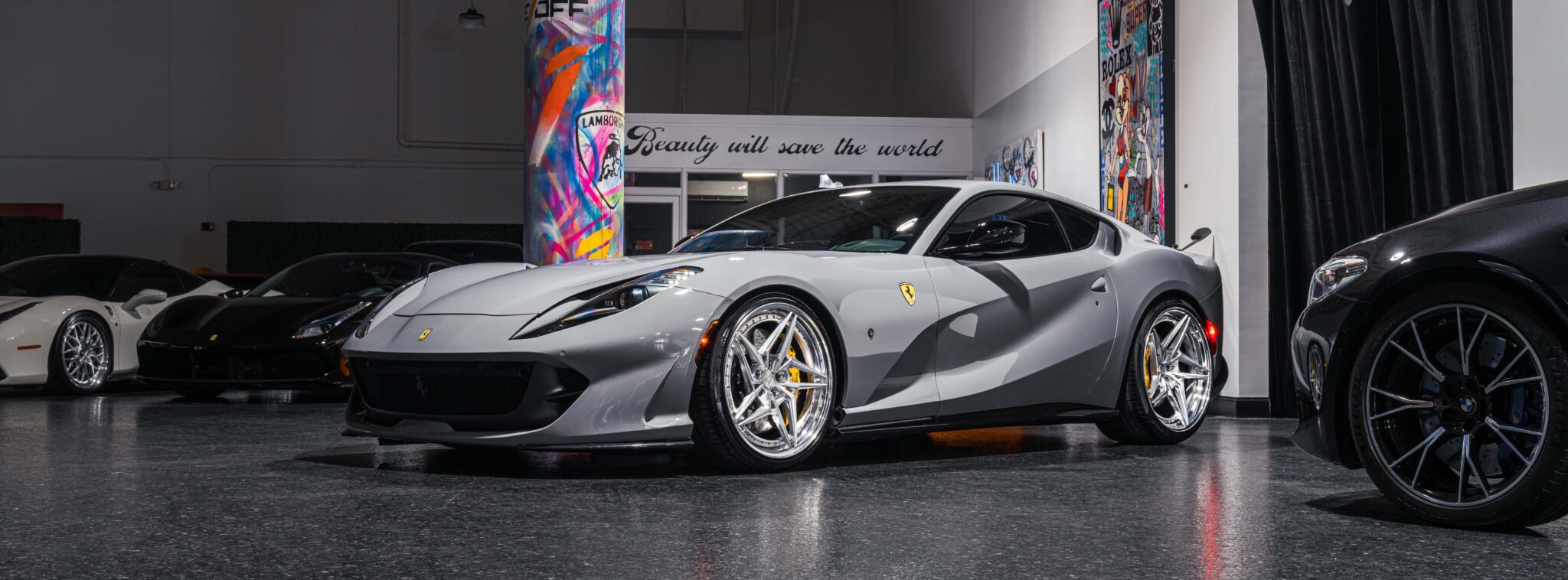
Buying a pre-owned Ferrari should be one of the most exciting decisions you ever make.
For many enthusiasts, it is. For others, it turns into a six-figure lesson in what they did not know.
The difference between those two outcomes almost always comes down to preparation. Knowing which models hold value. Understanding what a complete service history actually looks like. Spotting the red flags that even seasoned buyers miss.
This guide gives you everything you need to buy a pre-owned Ferrari with confidence: from choosing the right model and evaluating condition, to negotiating the deal and planning for ownership costs.
Whether this is your first exotic car purchase or your fifth, what follows is the playbook that experienced dealers and collectors use to make smart buys in this market.
Why a Pre-Owned Ferrari Is the Smarter Entry Point
You do not need to buy new to own an incredible Ferrari. In fact, some of the most desirable Ferraris on the market right now are pre-owned models that have already taken their initial depreciation hit.
New Ferrari allocation is notoriously difficult to secure. The factory produces limited numbers, and authorized dealers often prioritize existing clients with established purchase histories. First-time buyers are frequently told to wait, sometimes for years.
Here’s the deal:
The pre-owned market puts you in the driver’s seat. You can choose from decades of iconic models, find rare specifications that are no longer available from the factory, and in many cases, acquire a vehicle that has actually appreciated since it was originally sold.
Ferrari’s limited production strategy (roughly 14,000 vehicles per year across all models) means demand consistently outpaces supply. This is particularly true for V12 models, track-focused variants, and anything with special factory options like Tailor Made or Ad Personam specifications.
Pre-owned also means the vehicle’s character is already established. You can see exactly how the original owner specified the car, how it was maintained, and whether any modifications were done tastefully. There are no surprises waiting 18 months into a factory build.
If you are exploring the idea of selling your current exotic to fund your Ferrari purchase, getting a same-day cash offer can simplify the entire transaction.
Which Pre-Owned Ferrari Models Offer the Best Value Right Now
Not every Ferrari is created equal when it comes to pre-owned value. Some models are notorious money pits. Others are among the smartest automotive investments you can make.
Here is how the current landscape breaks down.
The Modern Sweet Spot: Ferrari 488 GTB and F8 Tributo
The Ferrari 488 GTB (2015-2019) and F8 Tributo (2019-2022) represent the peak of Ferrari’s twin-turbo V8 era. Both cars deliver staggering performance (660-710 horsepower), modern technology, and that unmistakable Ferrari driving experience.
Pre-owned 488 GTBs are now trading in the $220,000 to $300,000 range depending on specification, mileage, and service history. The F8 Tributo sits higher, typically between $280,000 and $380,000.
These models benefit from Ferrari’s seven-year complimentary maintenance program (transferable to subsequent owners), which means many examples still have remaining factory-covered service.
The Appreciating Legends: V12 Models
Ferrari’s naturally aspirated V12 engine is approaching the end of its era. With electrification and hybrid systems taking over the lineup, the last of the pure V12 grand tourers are becoming collector targets.
The 812 Superfast and 812 GTS are already appreciating. Low-mileage, well-specified examples are trading above their original MSRP in many cases. The 812 Competizione, with its limited production run, has become a bonafide collector’s piece.
The older F12berlinetta (2012-2017) is another strong contender. With 730 horsepower from its 6.3-liter V12, it offers one of the most raw and engaging driving experiences in Ferrari’s modern catalog. Pre-owned values have stabilized in the $250,000 to $350,000 range.
The Track Weapons: Speciale, Scuderia, and Pista Variants
Ferrari’s track-focused variants have historically been the best investments in the lineup.
The 458 Speciale, 430 Scuderia, and 488 Pista all command significant premiums over their standard counterparts. These cars are produced in lower numbers, feature weight reduction and increased power, and attract the most passionate segment of the buying market.
A 458 Speciale that listed for roughly $300,000 new now regularly trades between $350,000 and $450,000. The 430 Scuderia, despite being over 15 years old, still commands $250,000 or more for clean examples.
The Accessible Entry: Ferrari California and Portofino
If you are buying your first Ferrari and want a grand tourer that works for daily driving, the California T (2014-2017) and Portofino (2018-2023) are the most accessible options.
Pre-owned Californias start around $120,000, while Portofinos typically begin around $200,000. Both feature retractable hardtops, usable trunks, and a more relaxed driving character.
These models depreciate more than the track-focused variants. But they also cost less to insure, are more comfortable for longer trips, and their maintenance costs tend to be slightly lower than the mid-engine models.
You can browse our current Ferrari inventory to see real examples of pricing and specification across these categories.
The 7-Point Pre-Purchase Inspection That Saves You Thousands
A pre-purchase inspection (PPI) is not optional when buying a pre-owned Ferrari. It is the single most important step in the entire process.
Bottom line:
A $1,500 to $3,000 PPI can save you $20,000 or more in unexpected repairs. Never skip it.
Every Ferrari PPI should cover these seven critical areas:
1. Complete Service History Verification
A Ferrari’s service history is its biography. You want to see records from authorized Ferrari dealers or recognized independent Ferrari specialists for every scheduled service interval.
Look for documentation of annual services, timing belt replacements (on applicable V8 models, typically every 5 years or 5 engine hours on older models), brake fluid changes, and gearbox servicing.
Gaps in service history are the biggest red flag in the pre-owned Ferrari market. A car with incomplete records can lose 30-50% of its value compared to an identical example with full documentation.
2. Engine and Drivetrain Assessment
Your inspector should check for oil leaks (common around valve covers and gaskets on older models), listen for unusual noises during cold and warm startup, verify proper oil pressure, and assess clutch wear on models with the F1 automated manual gearbox.
On F1 gearbox-equipped cars (360, F430, 458, 488), clutch wear percentage is critical. Replacement costs range from $5,000 to $15,000 depending on the model.
3. Suspension and Chassis Inspection
Ferrari’s suspension components, particularly the MagneRide adaptive dampers found on many modern models, are expensive to replace. Your inspector should test all driving modes and listen for any clunking or knocking from the suspension.
A chassis alignment check can reveal whether the car has been in an unreported accident or driven aggressively over curbs.
4. Exterior Condition and Paint Depth
Paint depth readings across every panel will reveal whether the car has been repainted (indicating previous damage). Factory paint on a Ferrari is typically 4-6 mils thick. Readings significantly higher than that suggest body work.
Check for paint protection film (PPF) condition if present. Quality PPF is a strong positive indicator that the previous owner invested in protecting the vehicle. Yellowing, peeling, or bubbling PPF, on the other hand, will need to be replaced.
5. Interior Wear and Electronics
Ferrari interiors use premium leather, Alcantara, and carbon fiber. Check for seat bolster wear, sticky buttons (a common issue on older models with degrading soft-touch coatings), and proper operation of all electronics including the infotainment system, climate control, and any aftermarket additions.
6. Wheel and Brake Assessment
Many Ferraris come equipped with carbon-ceramic brakes, which are incredibly effective but also incredibly expensive to replace (typically $7,000 to $15,000 for a full set).
Your inspector should measure brake disc thickness, check for any cracking or delamination on carbon-ceramic rotors, and assess brake pad life remaining.
7. VIN and Title Verification
Confirm that the VIN matches across the dashboard, door jamb, engine block, and title documents. Run a comprehensive vehicle history report and verify that the title is clean and clear.
At Exotics Hunter, every vehicle in our inventory goes through a thorough inspection process before it reaches our showroom floor. We believe transparency is not a selling point; it is a baseline expectation.
Understanding Ferrari Ownership Costs (Beyond the Purchase Price)
The sticker price of a pre-owned Ferrari is just the beginning. If you do not budget for ongoing ownership costs, you are setting yourself up for an unpleasant surprise.
Here’s why this matters:
Ferrari ownership is absolutely manageable when you plan for it. It only becomes painful when you treat maintenance as an afterthought.
Annual Maintenance: $3,000 to $8,000 per Year
Ferrari’s Genuine Maintenance program covers scheduled service for the first seven years from new. This program is transferable, so if you buy a 3-year-old pre-owned Ferrari, you still have four years of complimentary maintenance remaining.
After the program expires, expect to budget between $3,000 and $8,000 annually depending on the model, mileage, and your driving habits. This covers oil changes, brake fluid service, filter replacements, and standard inspections.
Major Service Events: The Big-Ticket Items
Timing belt replacement on applicable models (348, 355, 360, and some F430 variants) runs between $3,000 and $6,000 and is typically required every 5 years regardless of mileage.
Carbon-ceramic brake replacement is the other major expense. A full set of rotors and pads can run $10,000 to $15,000. However, carbon-ceramic brakes can last 50,000 to 80,000 miles with proper use.
F1 gearbox clutch replacement is another consideration, typically costing $5,000 to $12,000 depending on the model.
Insurance: $4,000 to $15,000+ per Year
Ferrari insurance premiums vary significantly based on your driving record, location, garage setup, and the specific model.
Agreed-value policies from specialty insurers (Hagerty, Chubb, AIG Private Client) are strongly recommended over standard replacement-value policies. An agreed-value policy guarantees a specific payout if the car is totaled, protecting your investment.
Storage and Protection
Climate-controlled storage is recommended, especially in humid climates like South Florida. If you are garaging the car at home, a quality car cover and a battery tender are minimum requirements for any period of non-use.
PPF (paint protection film) and ceramic coating are worthwhile investments that protect the exterior and preserve resale value. A full-body PPF application runs between $5,000 and $8,000 depending on the installer and material.
Where to Buy a Pre-Owned Ferrari (And Where to Be Careful)
Not all buying channels are created equal. Each has tradeoffs.
Authorized Ferrari Dealers
Authorized dealers offer the Ferrari Approved Certified Pre-Owned program. This includes a comprehensive inspection, warranty coverage, and factory documentation. You pay a premium for this peace of mind, typically 10-15% above comparable private-market prices.
The advantage: you know the car has been vetted by factory-trained technicians. The downside: inventory is limited to what the dealer has sourced, and negotiating room is minimal.
Specialized Independent Dealers
Boutique exotic car dealers who focus specifically on high-end and exotic vehicles can offer the best combination of selection, expertise, and value.
The key is finding a dealer with a proven track record, transparent business practices, and deep knowledge of the exotic market. Look for dealers who provide detailed vehicle histories, high-resolution photography of every angle, and are willing to facilitate independent pre-purchase inspections.
This is exactly the approach we take at Exotics Hunter. Our curated inventory focuses on rare specs, tastefully modified vehicles, and clean titles. We handle nationwide delivery, so geography is never a barrier to finding the right car.
Online Auction Platforms
Platforms like Bring a Trailer and Cars & Bids have democratized the exotic car market. You can find excellent deals, but you are also competing with bidders who may push prices above retail.
The risk: limited ability to inspect before bidding, and no warranty or post-sale support. If you go this route, always arrange an independent PPI before placing a bid.
Private Sellers
Buying directly from an owner can sometimes yield the best price. However, you are responsible for verifying everything: title, history, condition, and liens.
But here’s the thing:
Private transactions lack the consumer protections that come with buying from a licensed dealer. There is no implied warranty, no dispute resolution, and no recourse if something is misrepresented.
Ferrari Modifications: What Adds Value and What Destroys It
The modification question divides the Ferrari community. But the market has spoken clearly about what works and what does not.
Modifications That Can Enhance Value
Quality aftermarket exhaust systems from recognized brands (Capristo, Novitec, Tubi) are generally viewed as enhancements. They improve the sound (arguably the most important part of the Ferrari experience) without compromising reliability.
Carbon fiber components from respected manufacturers like 1016 Industries or Novitec, when installed professionally, can add visual distinction and reduce weight.
Forged wheels from brands like HRE, Anrky, or Brixton are another well-received upgrade. They reduce unsprung weight and can give the car a more distinctive presence.
Full PPF and ceramic coating are always value-positive. They protect the original paint and demonstrate that the owner prioritized preservation.
Modifications That Hurt Resale Value
Engine modifications that void the factory warranty or compromise emissions compliance are a hard pass for most buyers.
Non-reversible body modifications, aftermarket paint jobs (especially in non-factory colors), and cheap vinyl wraps all reduce value.
The golden rule: any modification should be reversible, from a reputable brand, and professionally installed. If a modification cannot be undone to return the car to factory spec, it will narrow your buyer pool when it comes time to sell.
Many of the vehicles in our inventory feature tasteful, high-quality modifications from recognized brands. We believe the right upgrades can enhance the ownership experience while preserving value.
Can a Pre-Owned Ferrari Actually Be a Good Investment?
The short answer: yes, but only if you buy the right car, maintain it properly, and think long-term.
Now here’s the interesting part:
Unlike most vehicles, certain Ferraris have consistently appreciated over time. This is driven by limited production, strong collector demand, and the cultural significance of the brand.
Models with the Strongest Appreciation Potential
Track-focused variants (Speciale, Scuderia, Pista, Stradale) have the best track record for appreciation. These limited-production models attract the most passionate buyers and tend to hold value better than standard models.
Naturally aspirated V12 models are also gaining investment attention. As Ferrari transitions to hybrid and electric powertrains, the last of the pure V12 cars are becoming increasingly collectible.
Special-order specifications (Tailor Made, Ad Personam, PTS colors) also command premiums. A Ferrari in a unique color combination with documented provenance is worth significantly more than an identical car in standard spec.
The Variables That Determine Whether Your Ferrari Appreciates
Mileage matters, but not as much as you think. A well-maintained Ferrari with 15,000 miles and full service records is worth more than a garage queen with 500 miles and gaps in its documentation.
Service history completeness is the single biggest factor in long-term value. Authorized dealer records, performed on schedule, with documentation of every service event. This is what separates a six-figure car from a five-figure problem.
Condition, specification, color combination, and market timing all play roles. But documentation is the foundation everything else sits on.
How to Finance a Pre-Owned Ferrari Purchase
Most pre-owned Ferrari buyers do not pay cash, and they should not feel pressure to.
Specialty exotic car lenders like Woodside Credit, JM&A Group, and PremiumOne offer financing tailored to this market. Terms typically range from 24 to 84 months, with competitive rates for borrowers with strong credit profiles.
Traditional banks and credit unions can also finance exotic car purchases, though their underwriting process is often less familiar with high-value vehicles.
Lease vs. Purchase: What Makes Sense
Leasing a pre-owned Ferrari can make sense if you plan to drive the car for 2-3 years and then move into something else. Monthly payments are typically lower than purchase financing, and you avoid depreciation risk.
Purchasing makes more sense if you intend to hold the car long-term or if the model has appreciation potential. You build equity and maintain full control over modifications, maintenance choices, and resale timing.
We offer both financing and leasing applications through our website, making it easy to explore your options before committing to a vehicle.
Negotiating the Deal: How to Get the Best Price
Negotiating a pre-owned Ferrari purchase is different from haggling over a mainstream car. The market is smaller, the inventory is limited, and both sides usually have a strong understanding of current values.
Research Comparable Sales
Before making an offer, research recent sales of the exact model, year, and similar specification. Resources like the Hagerty Valuation Tool, Bring a Trailer completed auctions, and dealer inventory listings give you a real-time picture of market values.
Use PPI Results as Leverage
If your pre-purchase inspection reveals items that need attention (worn brakes, aging tires, upcoming timing belt service), these are legitimate negotiation points.
Get repair estimates from a qualified Ferrari specialist and present them alongside your offer. Most serious sellers will either address the issues or adjust the price accordingly.
Understand the Seller’s Position
A dealer who has held a car for 90+ days is more motivated than one who just acquired it. A private seller going through a divorce or estate settlement may be more flexible on price.
Timing matters too. The exotic car market in South Florida heats up during snowbird season (November through April), when wealthy buyers from the Northeast and Midwest are in town. Summer can be a better time to negotiate.
After the Purchase: Setting Yourself Up for a Great Ownership Experience
Congratulations, you own a Ferrari. Here is how to protect that investment from day one.
Establish a Relationship with a Trusted Service Provider
Whether you choose an authorized Ferrari dealer or a reputable independent specialist, consistency matters. Having a single, trusted shop handle all of your maintenance creates a clean paper trail and builds familiarity with your specific vehicle.
Protect the Exterior
If the car does not already have PPF (paint protection film), get it done within the first month. Road debris, rock chips, and environmental damage happen quickly, especially on low-slung supercars.
Ceramic coating on top of PPF is the gold standard for exterior protection.
Drive It
This may be the most important advice in this entire guide.
Think about it:
A Ferrari that sits in a garage and never turns a wheel is a Ferrari that develops problems. Seals dry out, batteries drain, tires flat-spot, and fluids stagnate. Regular driving (even 2,000 to 3,000 miles per year) keeps the mechanical systems healthy and is far better for the car than indefinite storage.
The cars that hold their value best are the ones that have been driven regularly, maintained meticulously, and enjoyed as they were designed to be.
Document Everything
Save every receipt, every service record, every communication with your shop. Photograph the car regularly. Keep the original window sticker, books, and tools.
When it comes time to sell, a comprehensive documentation package is the single most valuable asset you can present to a buyer.
When that day comes, our Sell My Exotic program makes it easy to get a fair, same-day cash offer for your Ferrari, no matter where you are in the country.
Your Next Move
Buying a pre-owned Ferrari is one of the most rewarding purchases an automotive enthusiast can make. But it demands the same level of care and preparation that went into engineering the car itself.
Do your research. Choose the right model for your goals. Insist on a pre-purchase inspection. Budget for ownership costs. And buy from someone who stands behind what they sell.
The right Ferrari, bought well and maintained properly, is not just a car. It is a piece of engineering art that you can drive, enjoy, and potentially profit from.
Ready to find yours? Browse our current inventory or contact our team to discuss what you are looking for. We source rare, exceptional Ferraris from across the country and deliver them to your door.